

I’ve stopped asking leaders if they have a strategy. I ask whether they have a process for changing it.
I remember spending months helping build strategic plans that eventually became impressive three-ring binders. They were filled with data, objectives, timelines, assumptions, charts, and carefully crafted visions of the future. Leadership teams would celebrate the completion of the planning process, present the binder to stakeholders, and then... move on. Too often, those binders gathered dust while the world moved on without them.
What I learned over the years is that if the goal is improved organizational performance, strategic planning cannot be an event. It must be a continuous system.
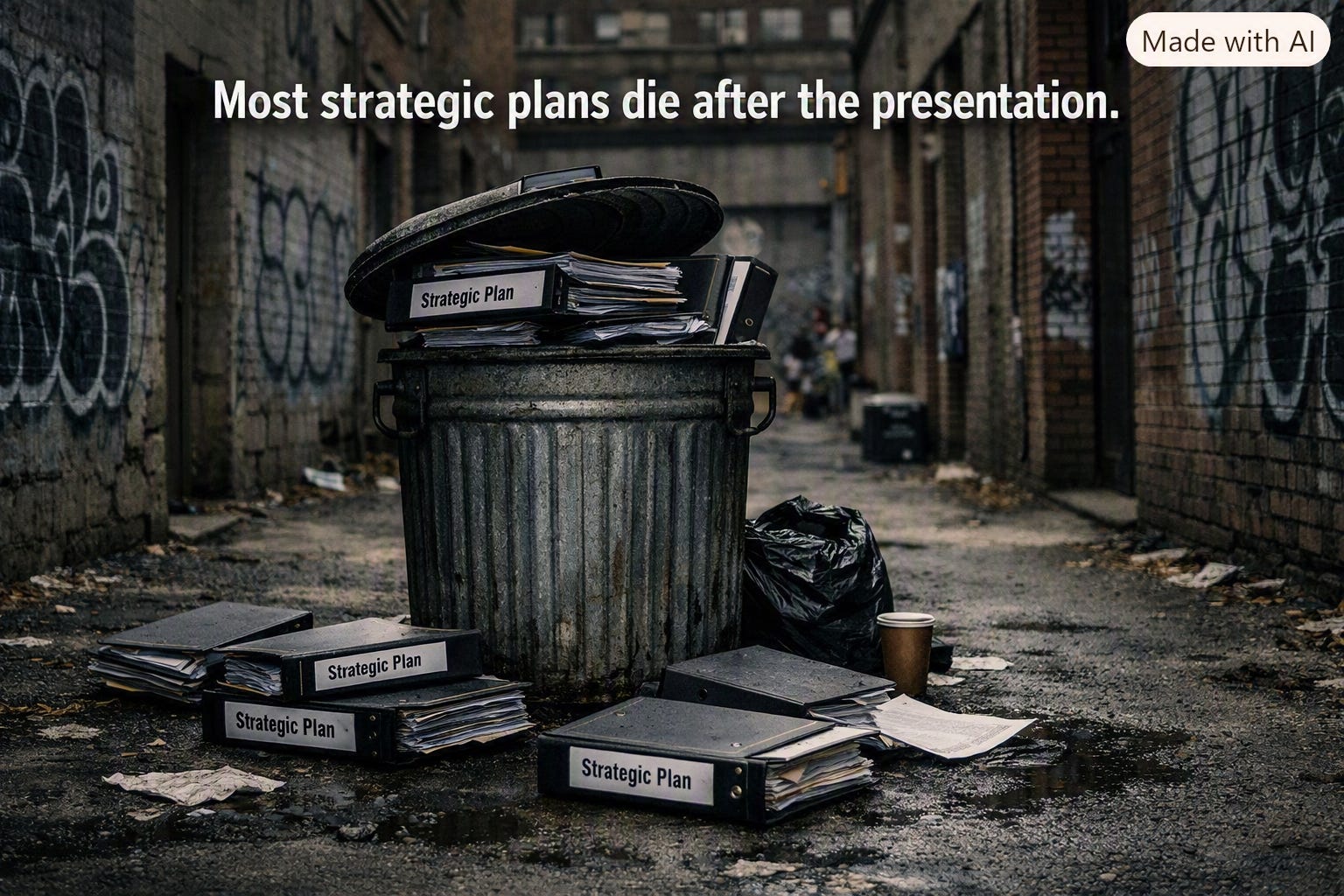
The problem wasn’t the quality of the plans. The problem was the assumption that the future would cooperate long enough for the plan to unfold as designed.
Today’s economic uncertainty, shifting political realities, technological disruption, and changing workforce expectations make static planning almost obsolete. Organizations that thrive have plans that focus on creating the space for their teams to have the best capability to learn, adapt, and realign.
That shifts the role of leadership dramatically.
The old model suggested that leaders were architects of strategy. Create the vision, document the roadmap, and oversee implementation. The modern leader must do far more.
Today, leaders are designers and administrators of a living strategy. Their responsibility is not simply to launch the vision but to continuously monitor the gap between intended strategy and actual behavior.
Are people making decisions aligned with our purpose?
Are our processes driving the outcomes we seek?
Have external conditions changed enough to require adjustment?
Which assumptions remain valid, and which should be challenged or rejected altogether?
In my consulting work, I often encourage leaders to think less about creating a perfect strategic plan and more about creating a strategic operating system. A living process that supports reflection, revision, and when necessary, rejection of workflows that no longer serve the mission. I ask them to have strategic reality checks with their teams and ask them:
What did we expect would happen?
What is actually happening?
What do we need to adjust?
Strategy was never meant to sit on a shelf. It was meant to guide decisions, shape behavior, and improve performance every day.
I’m curious about your experience. Have you ever worked on a strategic plan that quickly became irrelevant? What practices have helped your organization keep strategy alive and connected to performance?
And if you’re looking to transform strategic planning from an annual exercise into a continuous performance system, let’s talk about building the structures, processes, and learning cultures that keep strategy relevant, adaptable, and focused on results.
The real competitive advantage today may not be having a better plan than everyone else. It may be having a better process for learning when the plan needs to change.
#StrategicPlanning #LeadershipStrategy #BusinessStrategy #LeadershipDevelopment #PerformanceImprovement #FutureOfWork
Architects of a living strategy is a great reframe, Bill. What I find most challenging for leaders in making that shift is the loss of sense of control it creates. A lot of leaders feel like this more adaptive responsive approach makes them look weak, that readjusting course is a sign of course is a sign or ignorance or uncertainty. It's not. It's leading in an uncooperative world.