
Future Skills Blueprint: Designing Capability for the Work Ahead
The Real Competitive Advantage: A Workforce Built Ahead of Need

I’ve seen what happens when we treat development as optional — people disengage. When we build capability intentionally, they rise and we all succeed.
I’ve spent years helping leaders move from reactive hiring to intentional development. And I’ve seen what happens when we don’t: teams scramble, roles stagnate, and performance suffers. That’s why I created, with help from CoPilot to visualize, the Future Skills Blueprint—a visual framework to help organizations shift from vacancy panic to capability planning.
At its core, this blueprint is about designing for the work ahead, not just backfilling yesterday’s job. It’s a reminder that talent strategy isn’t about who’s available—it’s about who’s ready.
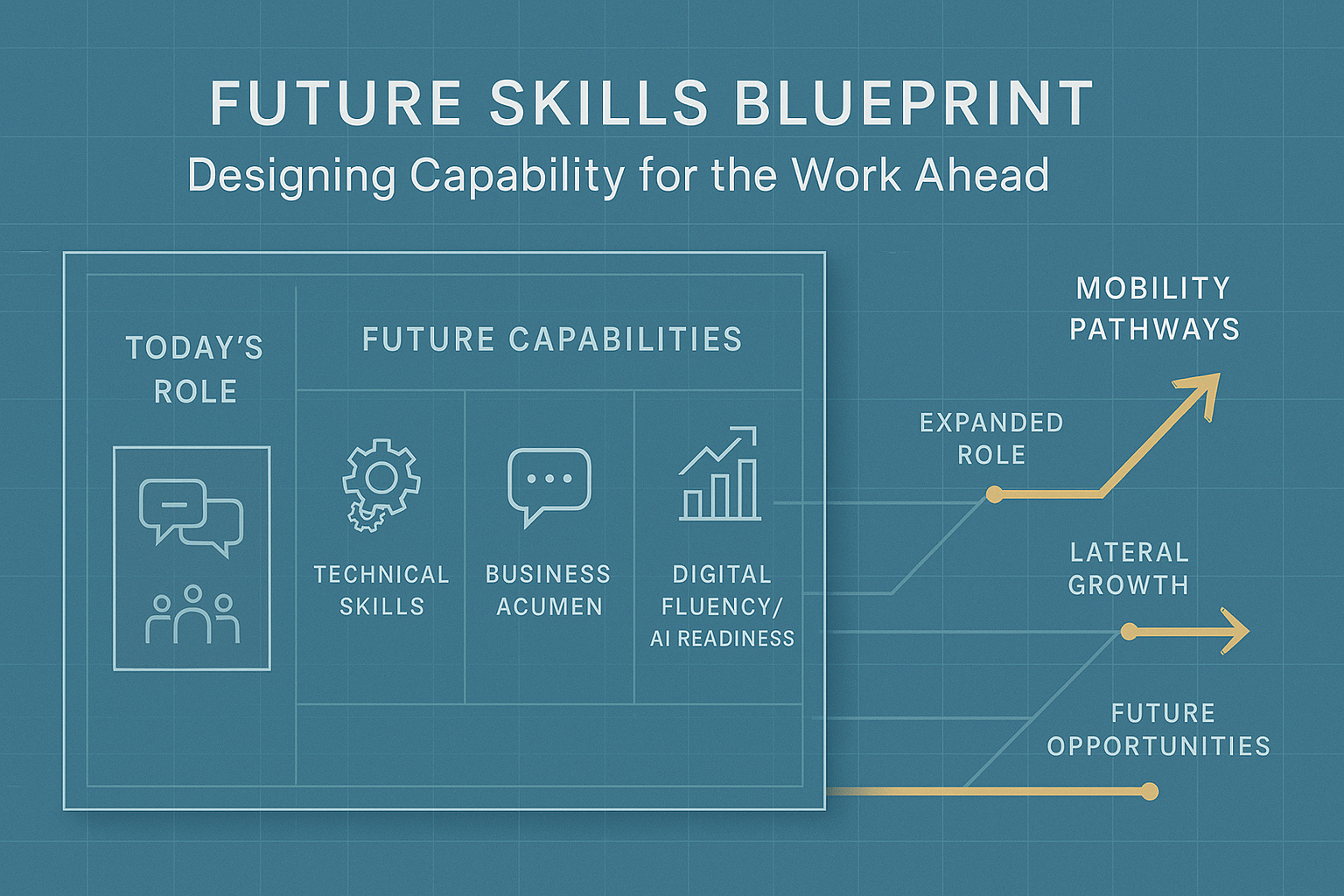
What the Blueprint Shows
Today’s Role: A snapshot of current responsibilities that are important but often limited.
Future capabilities are the skills and mindsets people need to grow into the work that’s coming, not just the work they’re doing today. This is where organizations often fall short: they define roles based on current tasks instead of emerging expectations. When we intentionally map future capabilities, we give teammates a clear picture of what “ready” looks like. I see these capabilities spanning 4 domains:
Technical Skills: The evolving tools, systems, and domain expertise required to perform at a high level.
Interpersonal Skills: Communication, collaboration, influence, and the ability to navigate ambiguity, the human skills that make teams effective.
Business Acumen: Understanding how the organization creates value, how decisions ripple across functions, and how to think strategically.
Digital Fluency & AI Readiness: Comfort with data, automation, and emerging technologies that shape how work gets done.
Mobility pathways make growth tangible. Instead of vague promises about “opportunities,” pathways show teammates where they can go and grow and what it takes to get there. They also broaden the definition of advancement beyond the traditional upward climb. Effective pathways include:
Expanded Roles: Stretch assignments or scope increases that help people build capability without changing jobs.
Lateral Growth: Moves across teams or functions that deepen perspective, develop more complex and cross-functional networks and connections, broaden behavior and skill sets, and prepare people for more complex roles later.
Future Opportunities: Clear visibility into roles that may not exist yet but are emerging as the organization evolves.
Action Steps You Can Take
Use the blueprint to audit your current roles and future needs.
Build capability maps that align with your strategy—not just your org chart.
Make mobility pathways part of everyday conversations, not just annual reviews.
Invest in skills before you need them, so your team is ready when the moment comes.
When future capabilities and mobility pathways are visible and clearly defined, development becomes intentional rather than accidental. People know what to work on, leaders know how to support them, and the guesswork disappears. Teammates can see how their skills connect to real opportunities, and the organization builds strength ahead of need. It’s a shift from “wait and see” to a culture of “grow and prepare.”
Please share how you’re approaching capability-building in your organization.
What’s working? What’s missing? What future skills are you prioritizing? And if you’re looking to bring this blueprint to life—through workshops, strategy sessions, or leadership development—I can help so let’s talk.
#CapabilityBuilding #TalentStrategy #FutureSkills #LeadershipDevelopment