
Before You Build Training, Talk to the People Doing the Work.
The Real Experts on Performance Are Often the Least Consulted.

If you want to improve performance, stop assuming the people doing the work are the problem. Start asking them what the problem is first.
If you ever been involved in a DACUM process you know that it involves using 2 different groups of “highly skilled, incumbent workers”. To develop and validate a curriculum we went to the front-line experts, the people involved daily with actual workflow.
And over the years, when a leader would confidently explain why performance wasn’t where it needed to be and was telling me that training was needed, I would make time to talk with the practitioners because the closer you get to the work, the closer you get to the truth.
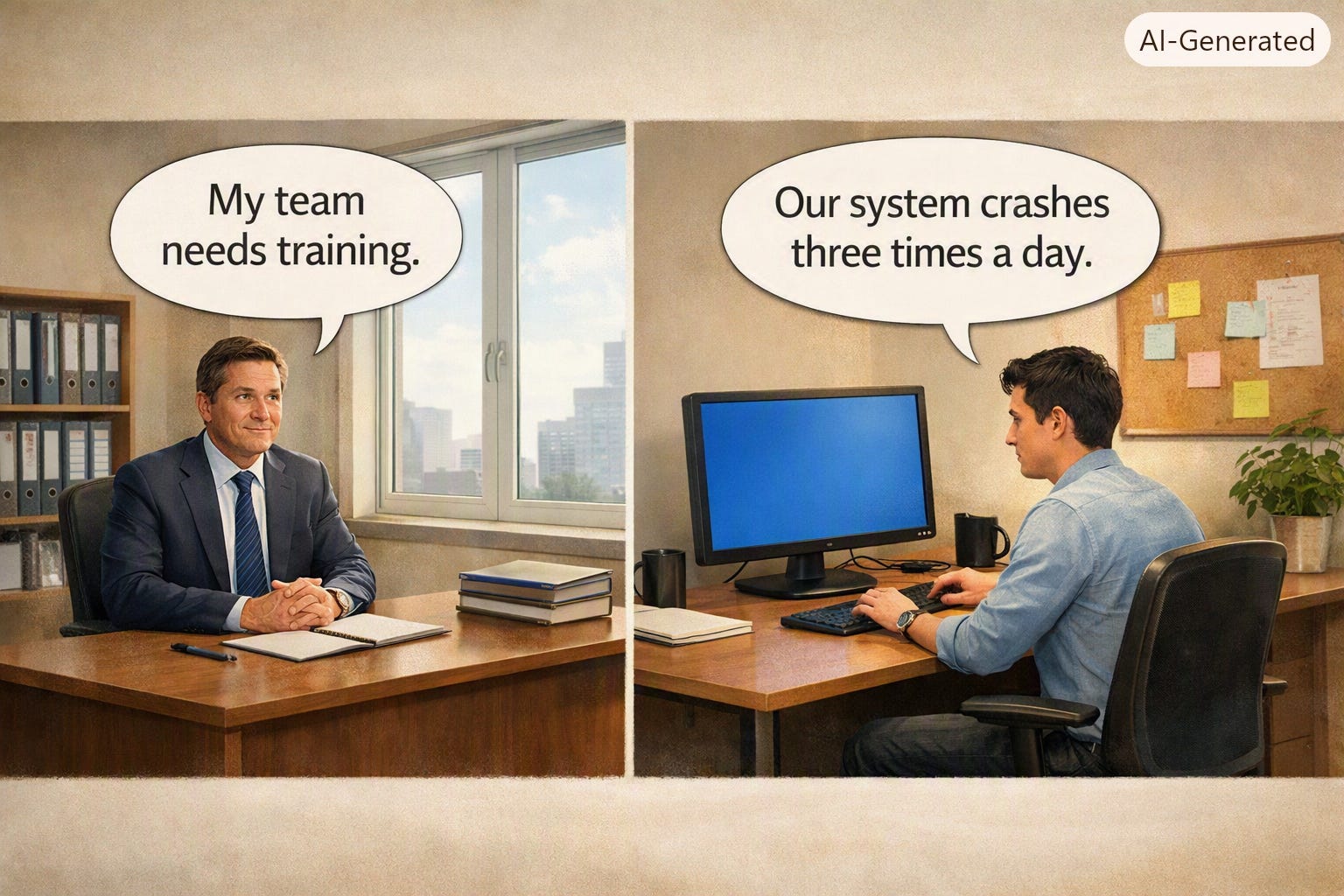
The people performing the work every day often see barriers that managers, leaders, and corporate functions simply can’t see. Frontline employees know where the process breaks down. They know which systems create friction. They know which procedures no longer make sense. And they know when a training request is actually a workflow, policy, technology, or leadership problem in disguise.
Yet too often, L&D professionals diagnose performance challenges without ever consulting the people experiencing them. I’ve seen organizations spend months designing training for problems that frontline workers could have explained in a 30-minute conversation. So when I get brought in to “fix” a problem I get to the workers and ask, “What is making it harder for you to be successful?”.
The answers are often eye-opening. I’ve had employees tell me they can’t find information when they need it. Sometimes approvals take too long. Sometimes technology creates unnecessary work. Sometimes they’ve developed unofficial workarounds because the official processes and procedures no longer fit the actual flow of work.
Those insights are performance gold. If you’re faced with a training request, take some time to find 3 frontline employees who are performing to the best level possible and ask:
✅ What makes your job harder than it needs to be?
✅ What slows you down most often?
✅ What workarounds have become part of your daily routine?
✅ If you could change one thing tomorrow, what would it be?
Then listen without defending the process. You may discover opportunities that no dashboard, stakeholder meeting, or training request would ever reveal.
I’ve come to believe that some of the best performance consulting happens before a solution is proposed and before a manager identifies what they believe the problem is.
It happens when we become curious students of the work itself.
As organizations continue to pursue AI, automation, workforce transformation, and productivity gains, the companies that succeed won’t just listen to leaders. They’ll create systems for listening to frontline employees as well.
Because performance improvement isn’t something we do to people. It’s something we create with them.
When have frontline employees helped uncover the real source of a performance challenge? What insights have surprised you most?
And if your organization is looking to strengthen performance consulting practices, improve workforce effectiveness, redesign the flow of work, or better connect learning to business outcomes, let’s talk.
Sometimes the people closest to the work hold the insights, and the performance solutions that work, yet they are the farthest from the boardroom.
#PerformanceConsulting #EmployeeExperience #OrganizationalEffectiveness #LearningAndDevelopment #Learning Strategy